
As engaged educators we think about the atmosphere of the classes we facilitate. How can I design welcome activities to foster an atmosphere of belonging? How can I use icebreakers to nurture an atmosphere of relaxation or fun? How can I disrupt the monotony of online classes to provoke an atmosphere of intrigue, or inspiration?
These are atmospheres of emotion and affect – they are the moods or feelings of what it’s like to be in a particular learning space and community at a particular moment. There is a growing body of literature interested in the roles of such atmospheres in education broadly (Nørgêard 2022; Masschelein et al. 2022) and in business education (Michels & Beyes 2016). In our recent study (Tyrrell & Shalavin 2024), we took this work on affective atmospheres as a foundation to also inquire into the literal air of learning, or ‘biometerological’ atmospheres (Loenhart 2021). The study responds to a call from Macgilchrist et al. (2024) to consider the design of our learning futures. In the midst of the unfolding climate crisis and in the wake of the COVID19 pandemic, we saw that literal air has been an overlooked infrastructure of learning and agential force of design. Simply put, without breathable air there can be no learning futures. From the black summer bushfires in 2019-2020 that shut down Australian University campuses, to the air pollution in global megacities, we explore examples of how breathable air can no longer be taken for granted. Acknowledging the entwinement of the human and more-than-human within increasingly fragile air systems, Loenhart has recently argued that we must now design for an ‘atmospherically entangled future’ (2021). In a world where our mutual imbrication by way of shared gases is rendered increasingly explicit, we asked, where is the air in the design of learning futures?
Foams of contemporary life
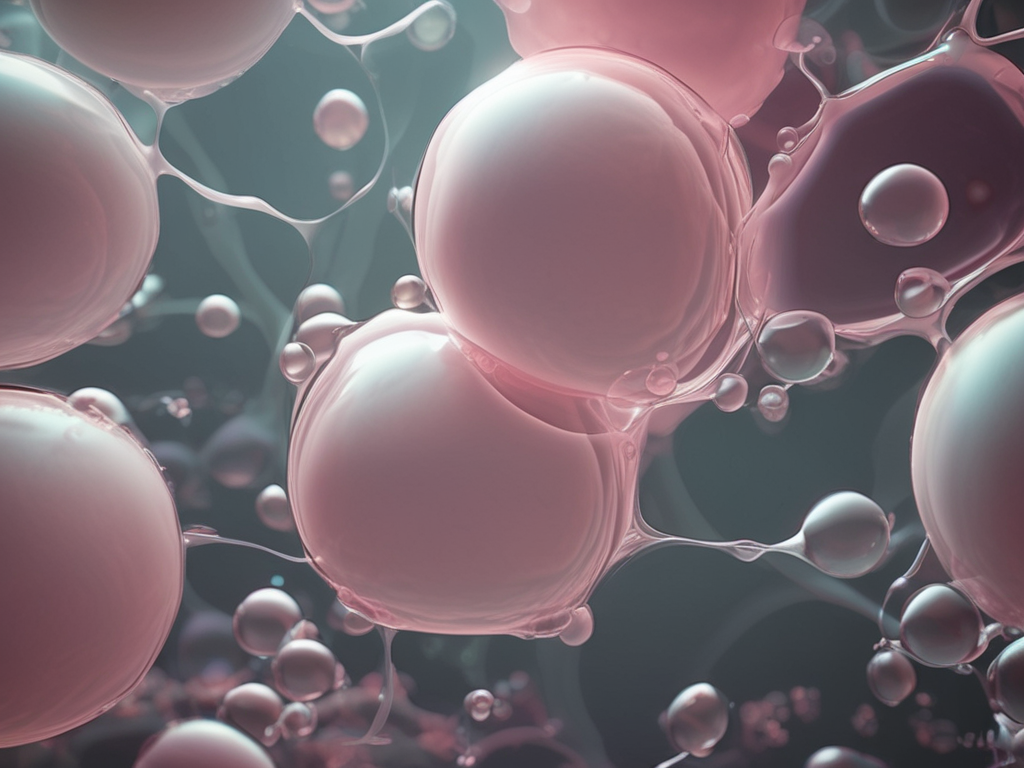
To explore this question, we took the form of foams as a starting point. Foams are, fundamentally, collections of interconnected air pockets or bubbles. Emerging in latticed or honeycombed structures of cellular clusters of bubbles or spheres, foams are containers of air and atmospheres (Fig. 1). The German philosopher Peter Sloterdijk argues that globalised, hyperconnected societies increasingly take on the form or structure of foams (2016). From apartment blocks to highways heaving with traffic, contemporary urbanised life plays out in tight and ever-changing clusters of isolated yet connected bubbles. These foams are such ubiquitous structures that they can be seen not as an outcome of human density but as an enabling condition of being. Put another way, foams as a metaphor articulate our entangled spatiality through an ontology of interconnected climates and atmospheres. Applying the inherently aerated structure of foams to education situations encourages us to acknowledge the shared air and atmospheres that sustain the complex entanglements of learning.

Learning foams
Our study develops ‘learning foams’ as a novel thought-image to aerate the existing concept of networked learning (Beaty et al. 2002) and provide a guide for thinking through atmospheric entanglements in education. The postdigital learning spaces (Carvalho & Lamb 2023) of higher education, including physical campuses and classrooms, as well as hybrid and online learning environments, and even individual devices and apps, can each be analysed as learning foams at different scalar levels. If the apartment block is Sloterdijk’s prototypical example of a foam, this analysis can equally be applied to the modern university campus which shares many architectural similarities (Fig. 2).

Zooming in from the macro view of the campus to individual buildings, these each in themselves constitute a foam of nested classrooms, offices and meeting rooms. Connected within an overall structure, these individual cells are separated by walls, doors, windows and corridors—membranes of ‘co-isolation’ (Sloterdijk, 2016). Each classroom, again, is a foam made up of clusters of students who might join with or separate into agglomerations with peer groups, chairs, coffee cups, desks, laptops, pens and phones. These assemblages have different temporalities, with some more ephemeral and others more sustained, but are always in processes of change and motion.
Further zooming in to a micro view allows us to see individual devices used for learning such as each laptop or phone within a classroom as itself another foam filled with constitutive bubbles of apps, windows, frames and tabs, all networked to meshes of other digital assemblages. At any one moment, a student’s laptop in a classroom might be simultaneously connected to multiplicities of changing online groups, communities and communication channels—some more associated with explicit, formal learning purposes than others. Through interactions and connections on various levels and at differing rates, they create learning foams.
Network vs foam
While the network metaphor helps describe different configurations of entanglement pertinent to learning, the contribution of foams is as a deeply spatial and habitable metaphor, it asserts air as a vital life support structure for learning (Fig. 3).

Applying the novel frame of learning foams to analysing our learning spaces and communities, we can better attune to the air and biometerological atmospheres as necessary to the design of breathable learning futures. Learning foams are a way of thinking about how patterns of being-together, or breathing-together, are sustained in the world. Foams delineate the proximities, intimacies and boundaries through which air and atmospheres entangle us. Foams are structures that encourage us to pay attention to our shared air and the conditions that sustain it, attuning us to our fragile planetary entanglements in and with nature, ecologies, technologies, pedagogies, materials, temporalities and forms of power, affect, and sociality. If we think of ourselves, in Sloterdijk’s term, as ‘co-fragile’ (2016) bubbles in a foam together (i.e. our protection is predicated on the protection of the delicate systems that sustain us), then what do we owe each other? What does this mean for how we behave with and for the human and more-than-human others that make up the foamy atmospheres that enable both life and learning?
We explore these ethical questions further, and unpack the politics of air and the characteristics of foams in detail in our article in Postdigital Science and Education. The original article that this post is based on is co-authored by Jessica Tyrrell and Courtney Shalavin.
About the author

humble educator | radical creativity | critical curiosity
Leave a Reply